
No longer referred to as bedsores, pressure ulcers or decubitus ulcers, pressure injuries (PIs) can occur in wheelchair-bound and bedridden patients. If not adequately treated, open ulcers can become a source of pain, disability, infection and unnecessary mortality.
According to the American Health Care Association, on any given day, 1.3 million individuals receive care in nursing homes or skilled nursing facilities, and more than 4 million receive care each year. Of that total, 64% remain in a skilled nursing facility for an average of 25 days, and the other 36% are long-term stay residents, an average age of 76, and often have multiple health conditions.
The Journal of Long-Term Care estimates that PIs occur in 10%-20% of nursing home residents. The most common areas where pressure ulcers form include: 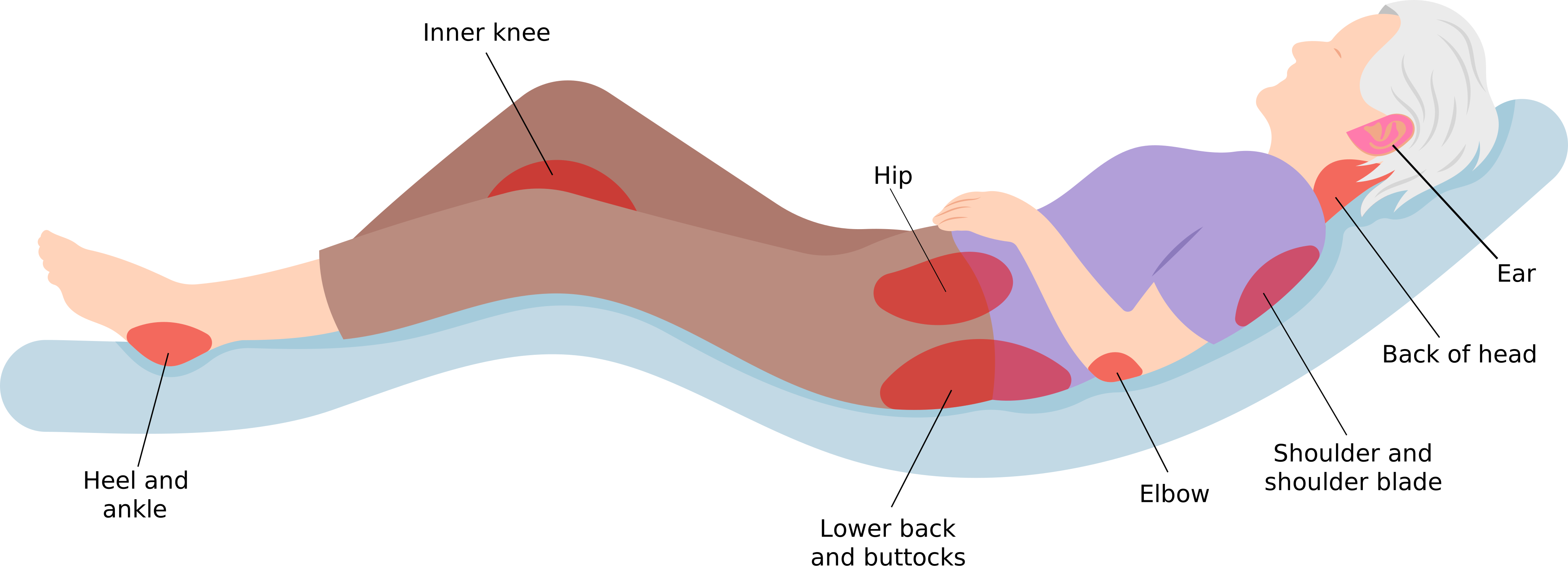
The cost of pressure injuries
According to a study in the National Library of Medicine, the incremental costs to hospitals regarding treating hospital-acquired PIs could be about $10,708 per patient. These costs amount to $26.8 billion in the United States annually.
Pressure injury prevention
Approximately 95% of all PIs are preventable. Healthcare workers in clinical settings are the first line of defense. They play a key role in identifying patients at risk and administering preventative care.
There are several steps you can take to mitigate the possibility of PIs.
- Assess pressure points frequently – backbone, sacrum, coccyx, buttocks, heels, elbows, hips and beneath medical devices.
- Cleanse the skin promptly after episodes of incontinence.
- Use pH-balanced cleansers for the skin.
- Avoid positioning patient on an area of redness or existing PI.
- Reposition frequently.
- Use pressure-relieving mattresses, cushions and heel protectors as well as floating heels.
Pressure injury risk factors
There are two types of risk factors that contribute to the development of PIs.
Resident risk factors
- Inability to reposition or ambulate
- Advanced age
- Chronic medical conditions
- Malnutrition/poor nutrition
- Incontinence or urine/stool leakage
- Prolonged length of stay
- Decreased circulation or sensation in an area of the body
- Underweight or overweight
- Limited staffing
- High staff turnover
- Lack of system-level prevention practices
Facility-level risk factors
- Limited staffing
- High staff turnover
- Lack of system-level prevention practices
Pressure injury identification
Pain can be one of the first signs of a wound, which makes identifying pain and the source absolutely essential. Pain is often described as a constant burning sensation, especially during turning, repositioning and dressing changes. Many individuals with cognitive disabilities can’t report discomfort or pain. Look for nonverbal signs of pain such as facial grimacing, wincing, moaning, body guarding or withdrawal.
Other signs include:
- Redness remains 30 minutes after pressure is relieved and is nonblanchable
- Change in sensation, skin color or temperature (warmer or cooler nearby skin areas)
- Skin feels spongy or hard to the touch
- Itchiness and pain in affected area
- Skin irritation – scrape, blister or open area
Many wounds may have mixed etiologies. You may identify venous and arterial insufficiency, as well as diabetic and pressure characteristics (e.g., diabetic patient with poor circulation).
Pressure injury staging
Pressure injuries are graded from Stage 1 to 4, along with two special categories, unstageable and deep tissue pressure injury (DTPI). To accurately stage a PI, its duration, size, shape and features – including any tunneling or undermining, quality of drainage and eschar – should be assessed.
- Stage 1 – Non-blanchable redness: Intact skin with a localized, non-blanchable area of redness (erythema). In darker skin tones, this may appear as discoloration, swelling or warmth.
- Stage 2 – Partial-thickness skin loss: Involving the epidermis and/or dermis, presenting as a shallow, open ulcer or an intact or ruptured serum-filled blister. No granulation, slough or eschar present.
- Stage 3 – Full-thickness skin loss: Loss of epidermis and dermis where adipose (fat) is visible, but underlying fascia, muscle or bone are not exposed.
- Stage 4 – Full-thickness tissue loss: Deep tissue loss with exposed or directly palpable muscle, tendon, ligament or bone.
- Unstageable: Full-thickness injury obscured by slough or eschar, which means that depth can’t be determined until slough or eschar is removed.
- DTPI: Persistent, non-blanchable deep red, maroon or purple discoloration of intact or non-intact skin, indicating severe underlying soft tissue damage.
The do's and don'ts of treating pressure injuries
| Do | Don't |
| Lift first, then reposition using draw sheets or lifting mats to minimize shear and friction to reduce damage to tissue. | Pull an individual across a surface; dragging causes skin damage. |
| Apply barrier creams/ointments after incontinent episodes to protect skin per facility protocol. | Delay changing an incontinent person; ammonia and enzymes in urine and feces damage the skin's protective ability. |
| Manage pain with oral medication, if necessary, especially around treatment times. | Massage bony prominences or reddened skin areas as it can damage tissue. |
| Turn or reposition frequently – every two hours or as appropriate for that person. | Leave an individual in one position for extended periods. |
| Relieve pressure using wedges, pillows or pressure-relieving mattresses and cushions. | Use donut-shaped or ring cushions, as they restrict blood flow to surrounding tissues and can cause deep-tissue injuries. |
| Use appropriate wound dressing to maintain moisture, which significantly speeds healing. | Air out the wound; it can dry the wound bed and allow bacteria to enter. Furthermore, don’t allow dressings to dry out; removing a dried dressing can destroy newly formed tissue. |
Help your staff provide the best care possible
When you partner with Impact Medical, your caregivers will have access to wound care education and training at no cost. Our certified wound care nurses can present quarterly educational programs covering the latest trends. In addition to onsite in-service training, you’ll have access to live virtual training, post-visit reports and ongoing education to help your staff provide the best care possible.
For more information about how Impact Medical clinicians can help improve the efficiency and quality of your care delivery, call 866.217.0372 or email clinicalsupport@impactmedicalkc.com.


