
A diabetic, 78-year-old female patient suffered from midfoot Charcot-neuroarthropathy. The deformity caused pressure points, and she developed open ulcers, which is common in older, diabetic patients. The ulcers became infected and she developed sepsis, bacteremia and necrotizing fasciitis.
The wound covered a significant portion of the top of her foot, so surgeons performed deep debridement, which included removal of a necrotic dorsalis pedis artery, the major artery on top of the foot. With a complex, serious injury like this, dressing the wound properly has significant impact on the recovery time frame.
In this instance, copper hydrofiber was the optimal choice as the primary dressing.
History
Copper has been used for centuries to care for and treat wounds by many different civilizations, including ancient Egyptians, Romans, Indians and Aztecs. It remained common throughout the middle ages and into the 1900s. With the discovery of penicillin, call for copper wound therapies diminished. Because silver was less reactive and easier to stabilize in creams, it became the choice for use in manufacturing stable bandages.
Driven by antibiotic resistance and chronic wounds, using copper in wound care is experiencing a renaissance. It can be used on all types of full-thickness wounds, when slough or necrotic tissue is present with moderate to heavy exudate.
Why copper works
Copper is biocompatible and safe and effective against bacteria, viruses and fungi. Impregnation of copper oxide microparticles allows continuous release of copper ions, which protects wounds and wound dressings from pathogens, and more importantly, enhances wound healing. It turns into a gel and helps with autolytic debridement by attaching to necrotic tissue. It helps clean and prepare the wound for healing. Sustained release of copper ions endows the dressings with potent wide spectrum antibacterial properties.
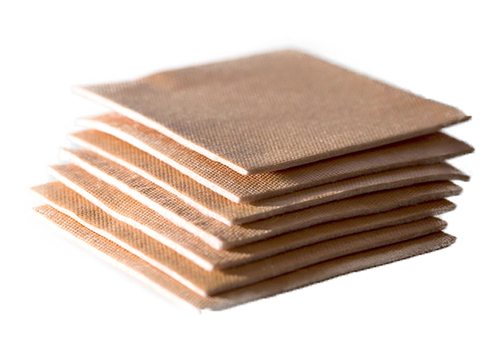 Copper wound dressings are easy to apply and remove, and are suitable for a wide variety of wounds including:
- Diabetic wounds
- Leg and foot ulcers
- Pressure ulcers
- First and second-degree burns
- Surgical wounds
- Venous and arterial ulcers
Copper vs. silver
For years, silver has been the go-to for antimicrobial dressing. However, recent medical research suggests that copper-impregnated dressings are often better, particularly in four specific areas.
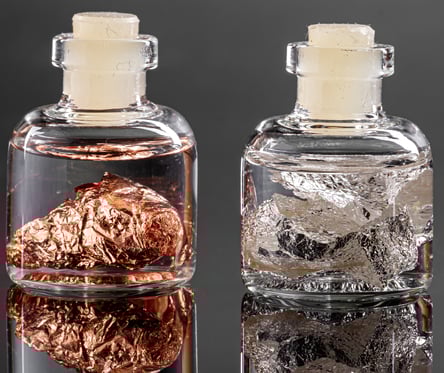
- Faster wound closure
Copper stimulates the growth of new blood vessels, critical for carrying oxygen and nutrients to a wound. Silver doesn’t do this. Copper helps build collagen and elastin – scaffolding that helps promote healing. Studies have shown that copper can speed wound closure by up to 2.4 times compared to silver because it supports every stage of the healing process, not just the clean-up phase. - Effective in different environments
Silver ions usually need a moist environment to be effective. If a wound is dry or in a low-humidity environment, its effectiveness drops significantly. Copper works efficiently in wet and dry environments and maintains its germ-killing power across a wider range of temperatures and humidity levels. - Pathogens can’t develop resistance
Silver kills bacteria primarily by disrupting their enzymes. Copper offers broad-spectrum efficacy, killing bacteria, viruses and fungi. It’s highly aggressive against cell membranes, making it difficult for superbugs like MRSA to develop resistance. - Significant safety advantages
Like silver, copper acts as an antimicrobial, without the toxicity. We don’t have silver in our bodies, but we do have traces of copper. There’s growing evidence that high levels of silver can actually be toxic to human cells, which can slow the healing process. Copper is an essential mineral for nutrition and skin health, so it’s generally much better tolerated by human tissue.
MedCu copper wound dressings
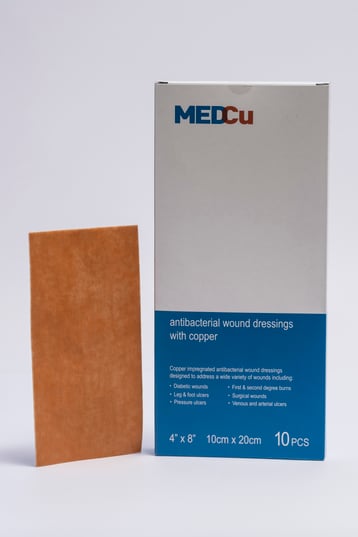 MedCu wound dressings are the only FDA and CE cleared antibacterial wound dressings on the market impregnated with copper oxide particles. These single-use dressings are designed to address acute, post-surgical and chronic wounds.
Learn more
As a primary dressing, MedCu copper dressings have the same code as calcium alginate, so it’s reimbursable by Medicare. It comes in several sizes and can be cut to fit the wound. MedCu just developed a rope product that can be packed into wounds that have tunneling and undermining. It should be available soon.
For more information about MedCu copper wound dressings or any of our wound care products, contact your Impact Medical sales representative or clinician.


