
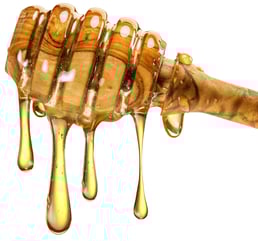
 From consumer to medical products, the popularity of manuka honey is on the rise, due in large part to the number of uses in the health and wellness industry. With the approval from the U.S. Food and Drug Administration (FDA), manuka honey is now used in an increasing number of wound care products. It has lower pH than most honeys, which can help promote optimal wound healing.
Although it hasn’t received FDA approval for general consumption, manuka honey is used in many consumer applications, including hand and nail creams, face masks and cleansers, as well as body washes, shampoos, conditioners, lotions, soaps and lip balms.
Honey’s history in wound care
The use of honey for wound care dates back thousands of years to ancient civilizations like the Egyptians and Greeks. The Māori people of New Zealand traditionally used the manuka plant for its medicinal properties, applying its gum to wounds and burns.
What is manuka honey?
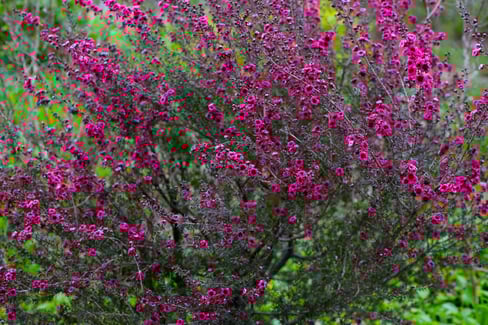
The most common varieties of honey are polyfloral, meaning the nectar comes from a variety of different flowers. Manuka honey is considered a monofloral because it comes primarily from one source: the manuka plant. It’s a shrub-like tree that grows primarily in drier, coastal regions of New Zealand and Australia. With its growing popularity, it’s grown in parts of the U.S. where the conditions are favorable (think California, Florida and Hawaii).
Modern research into manuka honey
Fast forward a couple of millennia. Modern medicine began looking into the what and the why surrounding manuka honey. In the early 1980s, Peter Molan, PhD, a Welsh-born researcher in New Zealand, began investigating the antiseptic properties of manuka honey.
Molan’s extensive research showed that manuka honey had a unique antibacterial property that was more potent and stable than the hydrogen peroxide found in other types of honey. The compound was identified as methylglyoxal (MGO), which is responsible for its antimicrobial activity. He established the Molan Gold Standard, a grading system for the quality of manuka honey based on its MGO content. He then conducted some of the earliest research into using honey to aid in the healing of wounds.
Antibacterial properties
Studies have shown that MGO found in manuka honey can effectively inhibit the growth of various bacteria, including Staphylococcus aureus, Streptococcus pneumoniae and Escherichia coli. The antibacterial potency of manuka honey is typically measured using a system called unique manuka factor (UMF). Higher UMF values indicate higher MGO content and stronger antibacterial activity.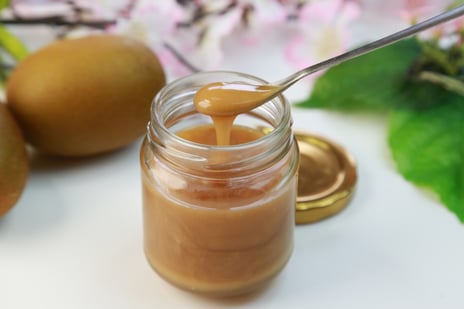
Anti-inflammatory
MGO creates a moist wound environment, which is beneficial for healing, as it provides optimal conditions for cell growth and tissue regeneration. It inhibits the production of inflammatory mediators, such as cytokines and prostaglandins, reducing inflammation in the body. Manuka honey's anti-inflammatory properties, potentially linked to MGO, can help reduce swelling and promote tissue repair.
Faster wound closure
Further study of a novel bio-engineered collagen with manuka honey (BCMH) sheet has been shown to achieve improved wound closure rates in chronic and acute wounds when compared with standards of care (SOC). For wounds that did close, the average time to closure was two times faster in the BCMH group compared with the SOC group (7.4 weeks and 14.8 weeks, respectively).
A BCMH sheet combines the benefits of collagen, manuka honey and hydroxyapatite to promote healing in chronic and acute wounds. It's designed to improve wound closure rates and reduce bacterial load, offering a comprehensive approach to wound care. It’s effective in keeping the wound moist while allowing for oxygen exchange and preventing bacterial contamination. The honey and collagen components promote cell growth, reduce inflammation and accelerate the formation of new tissue.
Ready to learn more?
VERIS™ by SweetBio® combines collagen and manuka honey in one revolutionary wound solution. For more information, contact one of our clinicians.


